
For years, opening a buzzy new restaurant in Toronto meant picking a spot in one of a handful of well-established downtown corridors — King West, Ossington, Queen West. That pattern is shifting fast, and the reasons come down to hard economics as much as anything else.
The numbers explain a lot. Prime downtown Toronto commercial space commands roughly $40 to $150 per square foot annually, compared to $25 to $45 per square foot in the suburbs — a gap wide enough to make or break a restaurant’s margins in its first few years. Downtown restaurants are also still contending with the lingering effects of hybrid work: sales in the core remain roughly 30 percent below pre-pandemic levels, driven largely by smaller office worker populations on any given weekday. Suburban neighbourhoods, by contrast, offer steadier local foot traffic that doesn’t disappear the moment remote-work Fridays roll around.

A growing list of established Toronto names is acting on exactly that logic. Mercatto Hospitality, which has run Cantina Mercatto, Taverna Mercatto and several other Toronto restaurants for nearly 28 years, recently opened its largest project yet not downtown, but in Mississauga’s Port Credit neighbourhood — an 8,500-square-foot space inside the new Brightwater waterfront development. Company principal Steve Christian was candid about the reasoning at the launch, noting that loyal guests had been driving in from Mississauga, Burlington and Oakville for years, which made expanding into the Lakeshore corridor an obvious next step rather than a gamble.
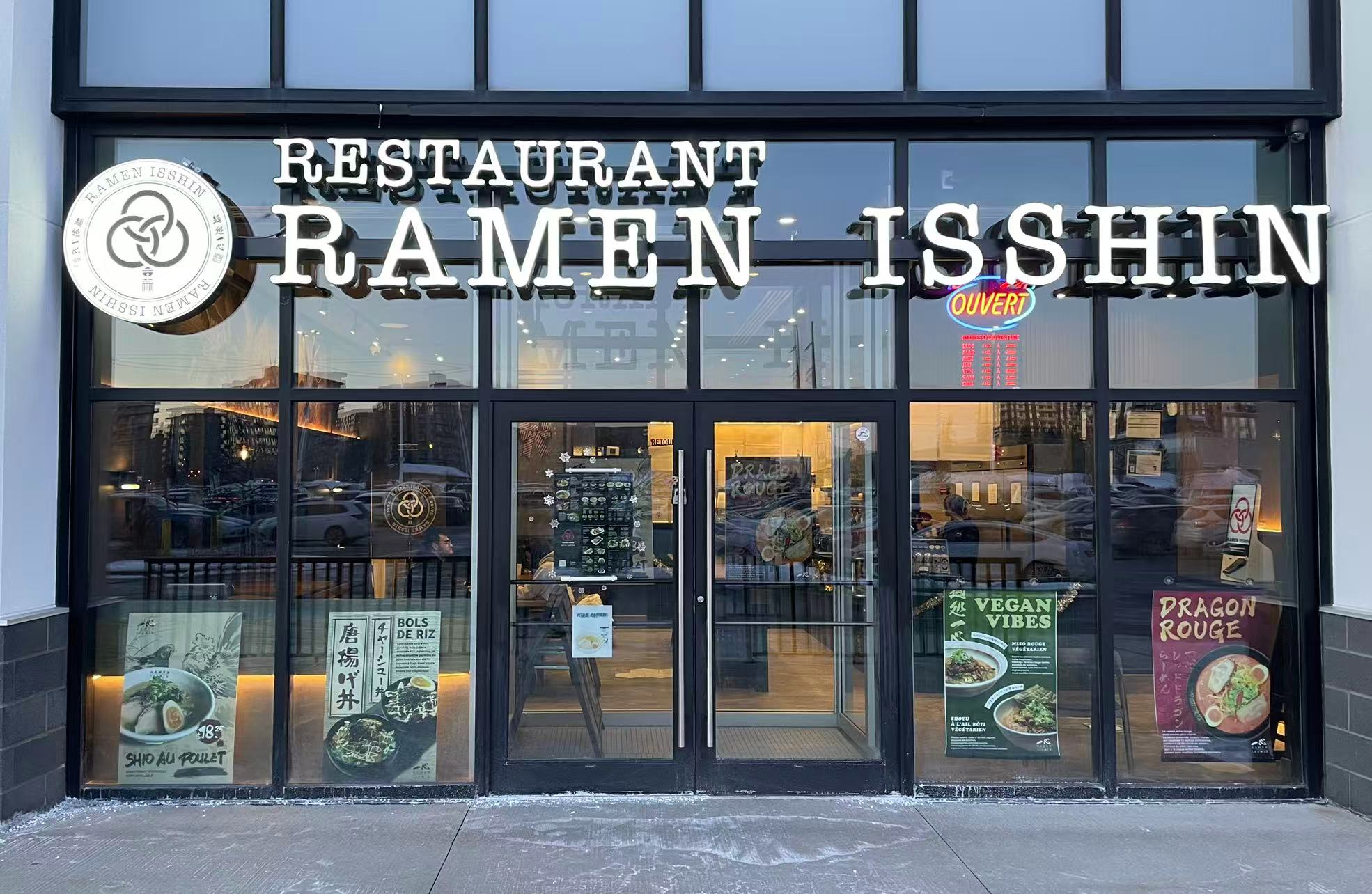
Ramen Isshin, which built its reputation out of a College Street original, has followed a similar path, expanding into Vaughan, Hamilton and Ottawa before adding a Mississauga location this year. Chiang Mai, the Thai restaurant chain that’s expanded quickly since opening its first Toronto location in 2018, opened its biggest location yet in Mississauga this spring. Thai Room Grand, another Toronto-founded brand, has taken the suburban push even further afield, opening new locations in both Mississauga and Oshawa. Even Firehouse Subs, expanding aggressively across the GTA this year, is splitting its growth between downtown flagship locations and smaller suburban formats as it works toward 60 to 70 new Canadian restaurants in 2026.

The appeal isn’t just about rent. Suburban markets offer restaurateurs access to different customer bases — often with real disposable income and considerably less competition for their attention than a downtown strip already saturated with options. For an operator looking to grow without taking on eye-watering lease costs, that combination of lower overhead and comparatively untapped demand is hard to ignore.
Whether the bet pays off long-term remains an open question. Downtown vacancy rates have actually been falling faster than suburban ones over the past year, suggesting the shift isn’t a simple story of restaurants fleeing a dying core so much as operators diversifying where they’re willing to plant new flags. But the early wave of suburban expansions — from Port Credit to Vaughan to Oshawa — suggests plenty of well-established operators are willing to find out, betting that lower overhead and untapped demand outweigh the loss of downtown foot traffic and visibility.
For diners in Mississauga, Vaughan, Oshawa and beyond, the practical upshot is simple: some of the city’s most established restaurant names are increasingly just a shorter drive away.