
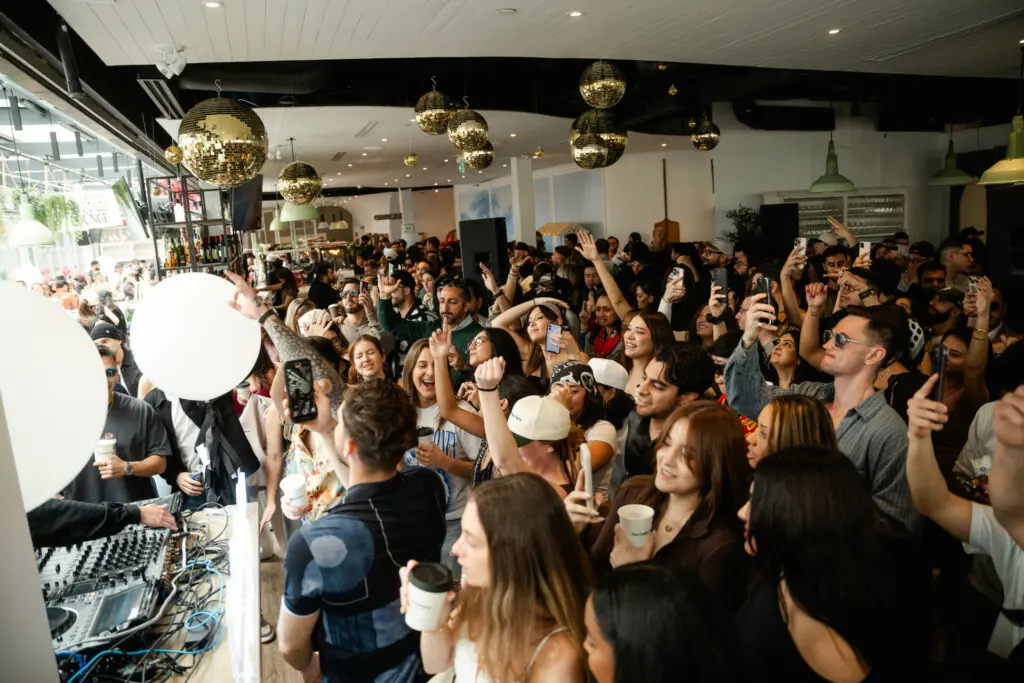
Toronto nightlife is moving away from static weekly programming and toward something far more dynamic: event-driven experiences.
In the past 30 days, a noticeable pattern has emerged. Venues are no longer relying solely on recurring nights—they’re building hype around specific, time-sensitive events.

This strategy creates urgency. Instead of “we can go anytime,” the mindset becomes “we need to go tonight.”
Scarcity is a powerful psychological trigger, and operators are using it more intentionally.

Pop-up themes are becoming increasingly common. From international DJ takeovers to branded experiences, these events feel unique and non-repeatable.
This is particularly effective in a saturated market where differentiation is everything.
Another factor driving this trend is social media. Events that feel special generate significantly more engagement.
People are more likely to post, share, and talk about something that doesn’t happen every week.
This creates organic promotion that extends far beyond the venue itself.
Ticketing is also evolving. More venues are experimenting with pre-sale models, even for traditionally open-door nights.
This helps forecast demand and secure revenue in advance.
VIP packages are being bundled into these events, often with added perks that aren’t available on regular nights.
This increases perceived value and drives higher spend per guest.
Collaborations are another key element. Venues are partnering with brands, influencers, and even other nightlife operators.
These partnerships expand reach and introduce new audiences.
From a production standpoint, event-driven nightlife allows for more creativity. Lighting, visuals, and performances can be tailored to a specific theme.
This level of customization enhances the overall experience.
Guests are no longer just attending—they’re participating in something.
This shift also benefits promoters. Instead of pushing the same message weekly, they can build campaigns around distinct narratives.
Storytelling becomes a central part of nightlife marketing.
Data plays a crucial role here. Understanding which events perform best allows venues to refine their strategy continuously.
Platforms like ClubConnect.vip can amplify this by tracking engagement, attendance, and user interaction.
Another advantage is adaptability. If one concept doesn’t resonate, it can be replaced quickly without disrupting the entire schedule.
This reduces risk while encouraging experimentation.
We’re also seeing a crossover with festival culture. Smaller-scale “mini festivals” are being integrated into nightclub environments.
This brings a new level of excitement to the scene.
Ultimately, event-driven nightlife is about creating moments rather than maintaining routines.
And in a city like Toronto, where competition is relentless, moments are what people remember—and what they come back for.